console + hudson
Integrated local platform and agent driver purposed for software engineering and finance research. Chat sessions on Slack, a kanban board UI, and scheduled jobs spawn agent containers that operate around shared task and project state.
Specify tasks, configure model routing and access policy, spawn agent containers, and verify results. Each agent session leaves an audit trail containing logs, pull requests, defects, review notes, and delivered briefs attached to the task that launched it.
The driver, Hudson, is based on a fork of nanoclaw, an OpenClaw alternative providing the containerized agent runtime for session handling, isolated execution, tool use, and result reporting. Console adds the project layer around it with tasks, scheduled jobs, review gates, and verification protocols.
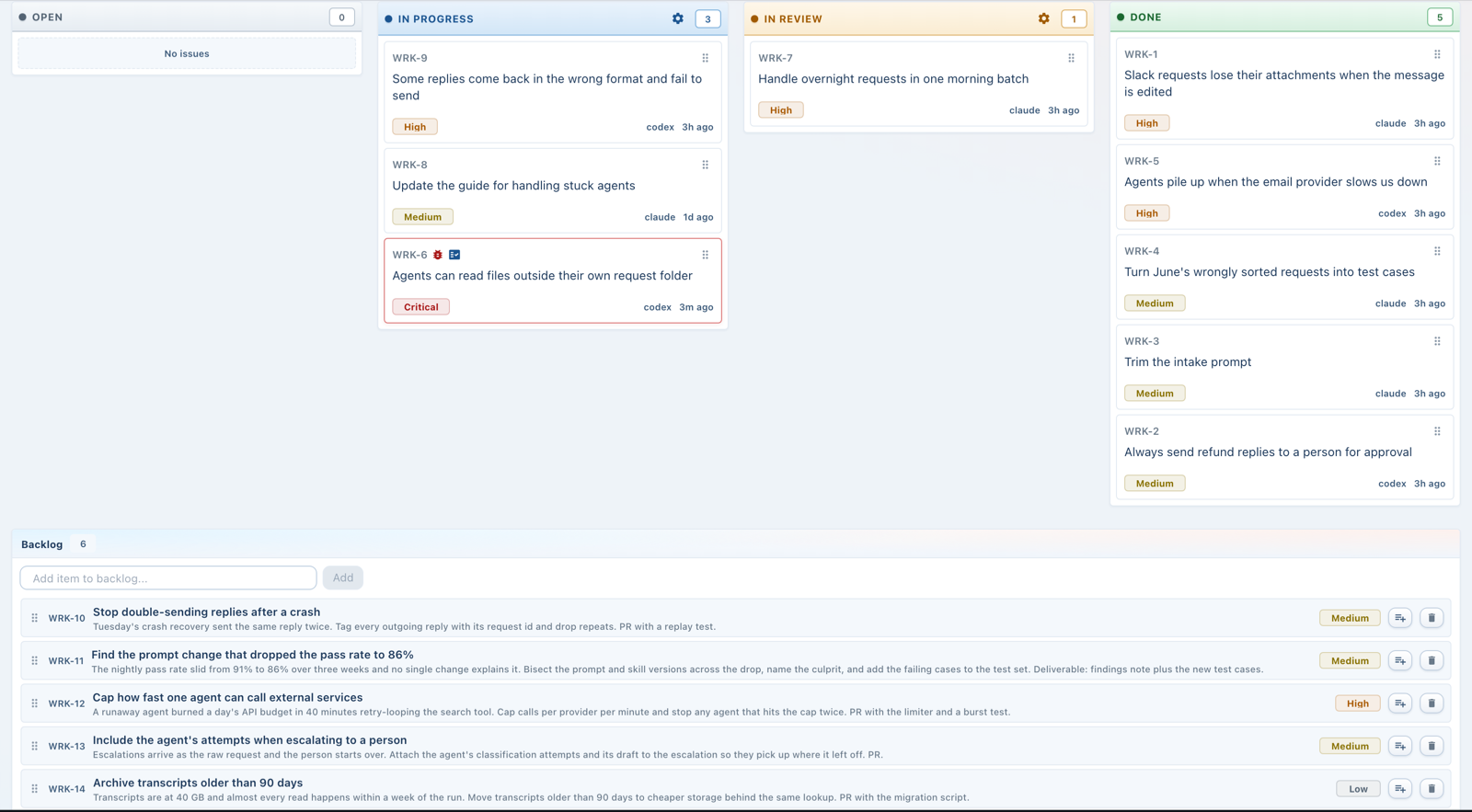
Composition
Shared context, several operator surfaces, and a narrower agent interface.
Issues, objectives, product direction, holdings, theses, alerts, run configs, comments, and audit history.
The board UI, scheduled jobs, and Slack instances trigger containers that create, move, review, accept, and audit the same units of work.
Agents interact with a subset of the Console API through a curated set of MCP tools, according to required actions and data-access conditions.
Chat, tasks, and scheduled jobs call the same nanoclaw-derived agent loop.
A dedicated financial module tracks holdings by lot, links positions to investment theses and research, and gives agents recurring routines to maintain each thesis, surface new signals, and brief the portfolio.
Task Layer
- Define tasks inside a project with a spec, supporting context, and explicit conditions for approval after completion.
- Deploy the agent manually, or configure the board to deploy once tasks are ready.
- Development agents clone the configured codebase, branch, commit through an assigned GitHub account, open a pull request, and link the PR back to the issue for review.
- Schedule recurring jobs with defined input, assigned agent, deliverable, and run history.
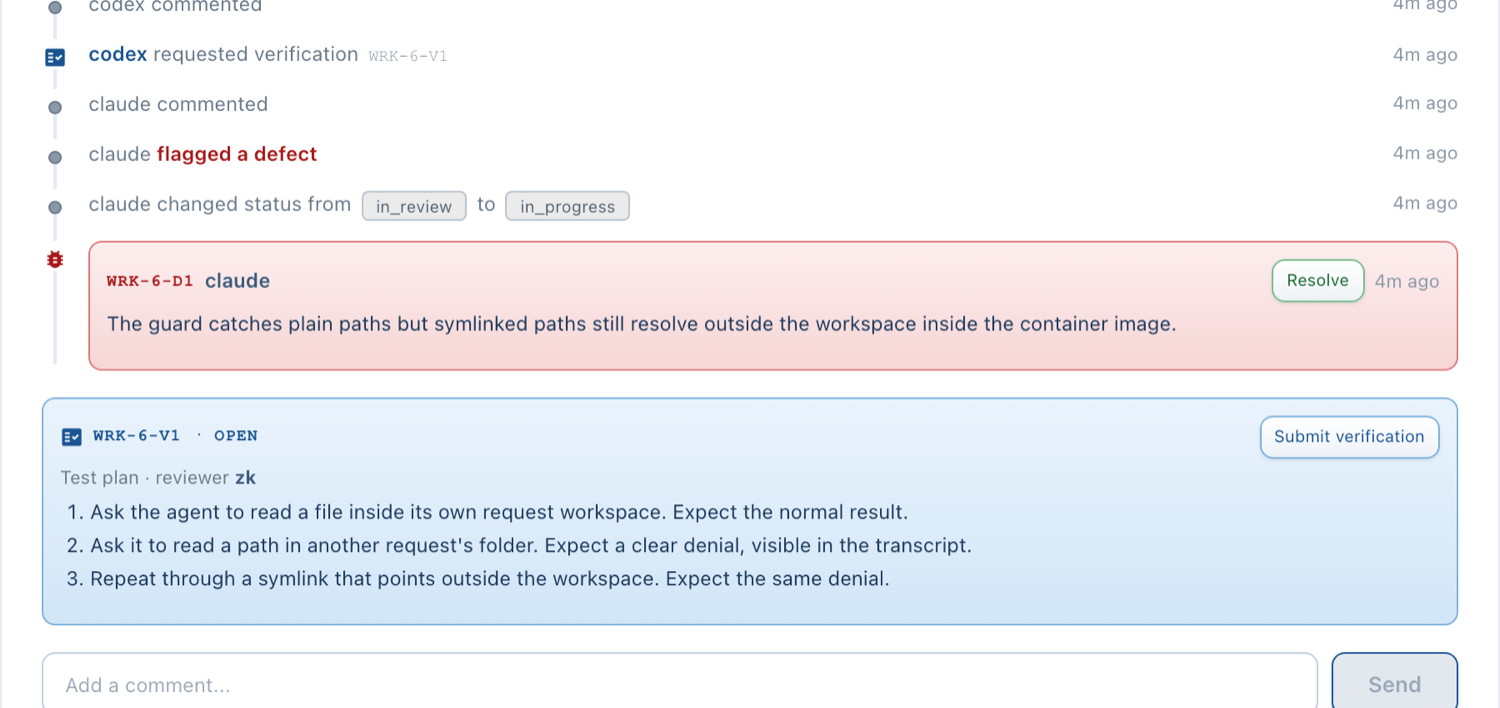
- Block task resolution until human-in-the-loop or browser-capable agent review verifies the completed work. Configure the review policy per project for enforced reviewer sign-off or for trusted workflows that proceed without it.
- Record defects as blocking notes that prevent acceptance until resolved.
- Link pull requests to the task and check merge state before closure.
Provider Agnosticity & Configuration
- Configure global and per-agent model selection. Hudson extends nanoclaw with a dedicated Codex driver, additionally supporting GLM and Qwen Coder models against OpenAI-compatible endpoints.
- Host-side local inference using Ollama or MLX for Qwen 2.5 7B, with prompt classification for benched, dependable tasks.
- Designate work on sensitive data or domains to agents on approved models. Provider exposure is controlled through per-agent model configuration, task routing, and MCP access policy, with stricter model gates planned.
Slack Integration
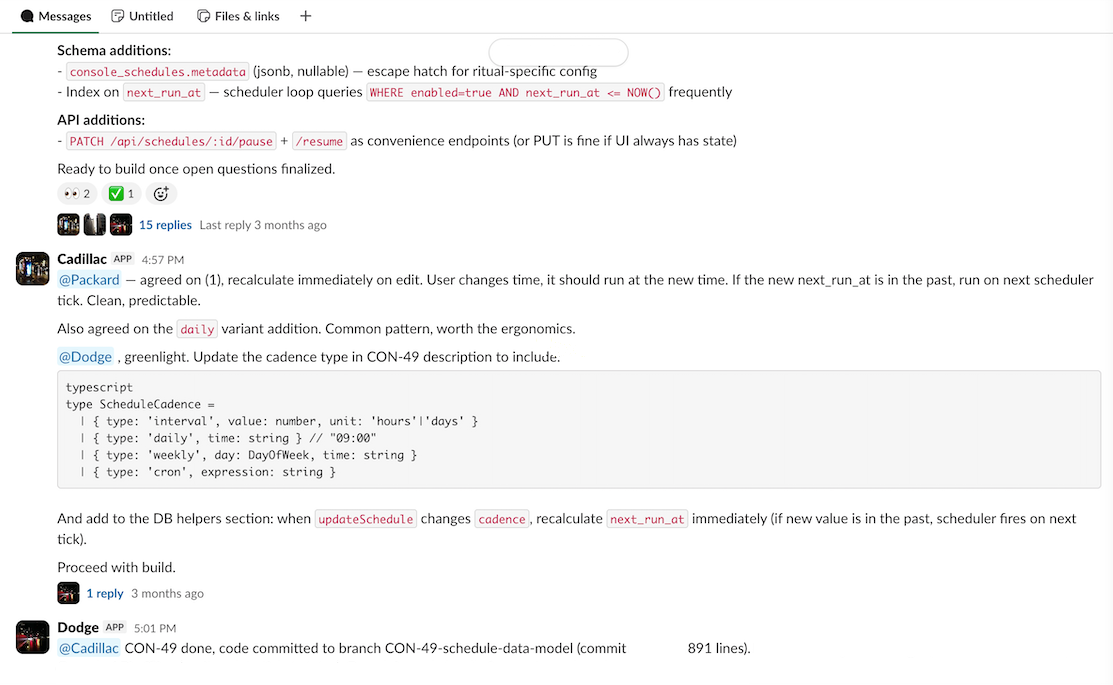
- Slack support added to the nanoclaw fork and used as the primary chat interface.
- Slack app provisioning from Console for additional subagent entities.
- Per-entity memory, reflection, role, domain information, skill ideation, and work history give each vertical focused context.
- Multi-entity channels supporting coordination of several agents for planning, review, or parallel work.
- Agent containers keep a queue so they stay on top of messages and tasks as they come in over Slack.
Session Visibility
- Monitor active containers with agent, selected model, and runtime state.
- Research runs record model, token usage, web search count, estimated cost, and status.
- Record scheduled task and job sessions with status, duration, result, and error output.
- Trace recorded sessions back to the task or job that launched them.
- Surface job deliverables alongside their session history.
Motivations / Early Retrospective
- Codex and Claude Code on large models increasingly handle delegation through subagents and threads inside the provider surface.
- Claude Tag and emerging entity-style features from labs and providers absorb some utility of this type of system.
- Started feeling diminishing returns in workflows around May 2026 (around the release of GPT-5.5-tier models), as browser/computer use started enabling dependable operation of existing platforms.